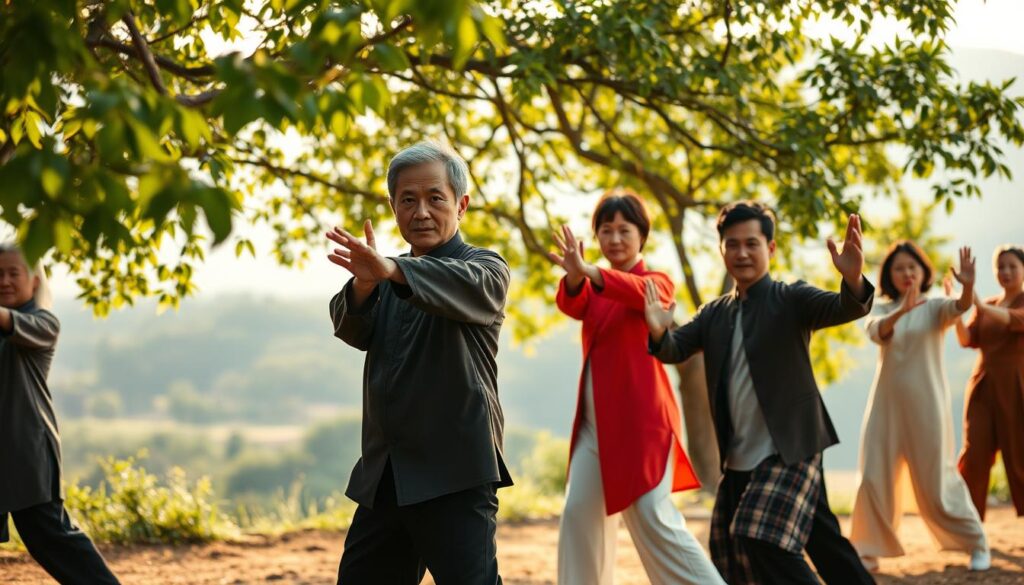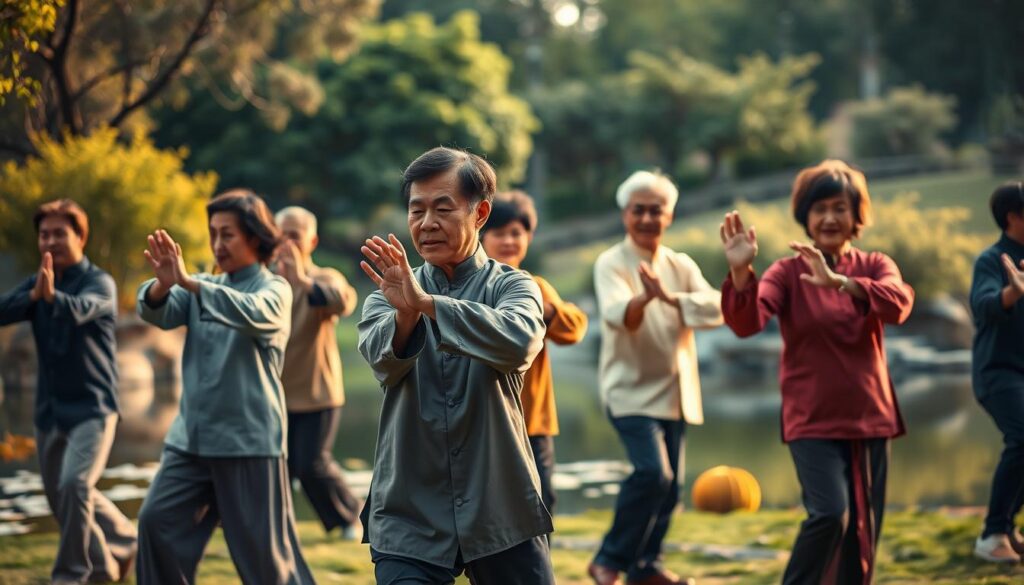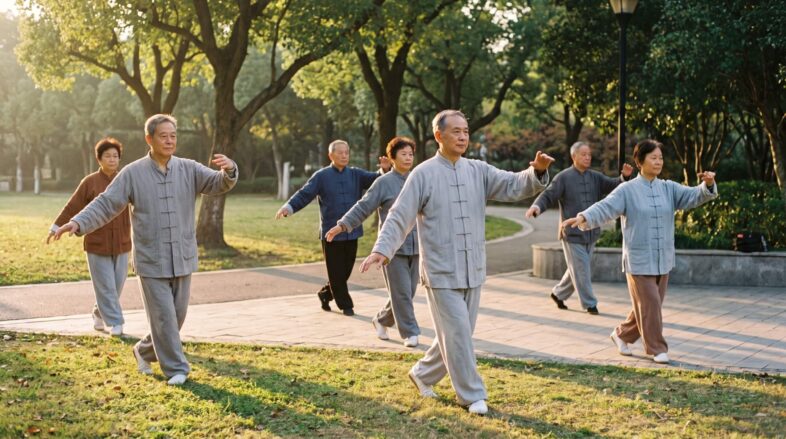
If you want the best Tai Chi walking exercises for weight loss, you're looking at slow, deliberate stepping patterns that pair deep breathing with functional strength moves — no jumping, no pounding, no wrecking your knees. This isn't a "walk around the block and call it exercise" list. Every move here comes from real Tai Chi postures, adapted into a walking format that actually burns calories while building muscle. Fifteen of them, ranked, broken down, ready to use. With proper breathing and full range of motion, these movements challenge your legs, core, and balance system way and that challenge is where the calories burn — and the toning — comes from.
What Makes Tai Chi Walking One of the Best Exercises for Weight Loss
Tai chi walking works for weight loss because it keeps your muscles under constant, low-level tension while you move — which sounds boring, but it's basically the opposite of boring for your metabolism, since your legs, core, and stabilizers never really get to "coast" the way they do during a normal stroll around the block. Think about it this way: regular walking is mostly momentum. Tai chi walking? Almost none. Every step is controlled. Every shift of weight is deliberate. That's where the burn sneaks in.
Here's how it stacks up against the usual suspects:
| Factor | Tai Chi Walking | Brisk Walking | Running | HIIT |
|---|---|---|---|---|
| Joint impact | Very low | Low | High | High |
| Calorie burn rate | Moderate, steady | Moderate | High | Very high |
| Long-term adherence | High (people actually stick with it) | Medium | Low-Medium | Low |
| Stress hormone impact | Lowers cortisol | Neutral | Can spike cortisol | Spikes cortisol short-term |
| Muscles engaged | Legs, core, stabilizers, arms | Legs mostly | Legs, cardio system | Full body |
A few reasons this stuff actually earns a spot on a "best of" list:
- Metabolic benefit. Slow, sustained muscle tension burns fat over time — not flashy, but it adds up.
- Joint-friendly. Your knees and hips will thank you. No slamming, no jarring.
- Stress reduction. Lower cortisol means your body's less likely to hoard fat around your midsection. Bonus.
- Core and balance work baked in. You're not just walking — you're stabilizing constantly, and that's basically a core workout in disguise.
- Anyone can do it. Seniors, beginners, people recovering from injury — this isn't some elite-athlete-only routine.
Quick Answer: The 15 Best Tai Chi Walking Exercises for Weight Loss at a Glance
The fastest way to answer "what are the best Tai Chi walking exercises for weight loss" is a ranked table you can scan in ten seconds — so here it is, before anything else.
| Rank | Exercise Name | Superlative Tag | Est. Calories/30 Min | Difficulty |
|---|---|---|---|---|
| 1 | Reverse Tai Chi Walk | Best for Overall Weight Loss | 150–200 | Beginner |
| 2 | Cloud Hands Walking | Best for Belly Fat Loss | 140–190 | Beginner |
| 3 | Repulse Monkey Walking | Best for Thigh Toning | 160–210 | Intermediate |
| 4 | Golden Rooster Stands on One Leg Walk | Best for Balance and Fat Loss | 130–170 | Intermediate |
| 5 | Grasp the Sparrow's Tail Walk | Best for Core and Abs | 150–200 | Intermediate |
| 6 | Brush Knee Walking | Best for Beginners | 120–160 | Beginner |
| 7 | White Crane Spreads Wings Walk | Best for Upper Body Toning | 140–180 | Intermediate |
| 8 | Parting Wild Horse's Mane Walk | Best for High-Intensity Burn | 180–230 | Advanced |
| 9 | Single Whip Walking | Best for Full-Body Toning | 150–200 | Intermediate |
| 10 | Snake Creeps Down Walk | Best for Lower Body Sculpting | 160–210 | Advanced |
| 11 | Wave Hands Like Clouds Walk | Best for Stress-Related Weight Gain | 130–170 | Beginner |
| 12 | Fair Lady Works Shuttles Walk | Best for Quick Sessions | 170–220 | Intermediate |
| 13 | Needle at Sea Bottom Walk | Best for Advanced Practitioners | 190–240 | Advanced |
| 14 | Push Hands Walking | Best for Seniors | 110–150 | Beginner |
| 15 | Cat Step Walking | Best for Long-Term Sustainable Weight Loss | 140–190 | Beginner |
Why These Made the List
Not every slow-movement exercise deserves a spot on a "best Tai Chi walking exercises for weight loss" list. These did — and here's why.
- They're low-impact but not low-effort. Big difference. Your joints stay safe; your muscles don't get off easy.
- Cardio and resistance, same movement. You're not choosing between "cardio day" and "leg day." You get both.
- Rooted in actual Tai Chi forms. Not made up. Adapted, sure, but the mechanics are real.
- Consistency beats intensity here, every time — which is honestly the whole point.
How These Best Tai Chi Walking Exercises for Weight Loss Were Ranked
The ranking for the best Tai Chi walking exercises for weight loss comes down to five factors weighted by how much they actually matter for fat loss results, not just how "hard" a move looks on paper. Calorie burn mattered most. Muscle engagement mattered a lot too. But accessibility? That counted for something real, because an exercise nobody can stick with isn't actually the "best" anything.
| Ranking Criteria | Weight | What It Measures |
|---|---|---|
| Caloric expenditure | 30% | Calories burned in a 30-min session |
| Muscle engagement | 25% | How many muscle groups fire, and how hard |
| Accessibility | 20% | Can a beginner or senior actually do this? |
| Fat-loss specificity | 15% | Belly, thighs, overall — where's the focus? |
| Sustainability | 10% | Will you still be doing this in six months? |
Quick notes on the numbers:
- Calorie estimates assume a 150–170 lb person moving at a moderate, controlled pace. Heavier or lighter? Adjust up or down.
- Muscle engagement got cross-checked against known Tai Chi posture mechanics — not guessed.
- "Fat-loss specificity" is really just: does this move hit your belly, your thighs, or your whole body? Some do one thing well. Some don't specialize at all.
Why Breathing is Important for Weight Loss Success
The single biggest factor separating a fat-burning Tai Chi walk from an aimless stroll is breathing — get that wrong, and you're leaving most of the benefit on the table. Sounds dramatic. It's true anyway.
Proper Breathing Technique
| Phase | Action | Duration | Purpose |
|---|---|---|---|
| Inhale | Nose, as you shift weight back or rise | 3–4 sec | Feeds oxygen to the diaphragm |
| Hold | Brief pause at the top of the shift | 1 sec | Stabilizes the core |
| Exhale | Mouth, as you step forward or press | 4–5 sec | Fires the deep abs, supports fat burn |
A few things worth knowing:
- Belly breathing, not chest breathing. Your stomach should expand on the inhale. If your shoulders are rising, you're doing it wrong.
- Exhale on the hard part. Always. The push, the press, the step — whatever's the tough half of the movement, that's where you breathe out.
- Never hold your breath more than a second. Ever. Tai Chi walking lives and dies on unbroken breath-movement timing.
Posture and Form Checklist
Get these four things right and everything else on this list gets easier:
- Spine long, head lifted — like there's a string pulling up from the crown of your head. Protects your lower back.
- Knees soft. Always a slight bend. Locked knees put all the tension in the joint instead of the muscle, which defeats the point.
- Heel-to-toe rolling on every step. This wakes up your calves and genuinely improves your balance-related calorie burn.
- Shoulders relaxed, dropped away from your ears. Tension up there just wastes energy you could be spending on the actual movement.
Safety Tips Before You Begin the Best Tai Chi Walking Exercises for Weight Loss
Before jumping into any of the best Tai Chi walking exercises for weight loss, know this: low-impact doesn't mean risk-free, and a few minutes of caution now saves you weeks of recovery later.
Who Should Check With a Doctor First
- Got balance issues or vertigo? Talk to your doctor before attempting anything single-leg, like the Golden Rooster Stands on One Leg Walk. Not optional.
- Heart condition or blood pressure issues — get clearance first. Even "gentle" movement raises your heart rate and circulation.
- Recent hip, knee, or back surgery? Wait for medical sign-off before deep stances like Snake Creeps Down.
- Pregnant? Modify or skip the deep hip hinges and low sinking postures, especially later on.
General Safety Guidelines
| Guideline | Why It Matters |
|---|---|
| Warm up 5 minutes first | Loosens joints, raises muscle temp |
| Flat, non-slip surface | Falls happen during weight shifts, not standing still |
| Sharp pain = stop | Normal fatigue and injury feel different — learn the difference |
| Hydrate before and after | Helps circulation, helps performance |
| Progress gradually | Don't jump from Brush Knee to Needle at Sea Bottom in week one |
| Flat-soled, supportive shoes | Better grip, better ankle stability |
Look — most of this is common sense. But people skip it anyway, so here it is in writing.
- Listen to your breath, not just your body. If you can't keep the inhale-exhale rhythm, slow the movement down. Don't rush the breathing to match a pace you're not ready for.
- Modify depth, not form. Shorten your stance if you need to. Don't skip steps of the sequence just because your knees are complaining.
- And don't lock your joints. Soft knees, soft elbows, every single time.
What You'll Need for the Best Tai Chi Walking Exercises for Weight Loss
You don't need much to get started with the best Tai Chi walking exercises for weight loss — that's actually one of the biggest selling points of this whole approach.
Essential Equipment Checklist
| Item | Purpose | Required? |
|---|---|---|
| Flat, supportive shoes (or bare feet) | Grip and stability | Required |
| Loose, comfortable clothing | Full range of motion | Required |
| 6×6 ft of open space | Room for wide stances and diagonal steps | Required |
| Non-slip mat | Reduces slipping on hard floors | Optional |
| Water bottle | Hydration during longer sessions | Optional |
| Fitness tracker | Tracks calorie burn across different moves | Optional |
| Mirror | Form checks — helpful for the advanced stuff | Optional |
That's it. No dumbbells. No resistance bands. No subscription app required (though you can use one if it helps you stay consistent).
Ideal Practice Environment
- Quiet space, minimal distractions — the breathing focus is half the benefit, and you can't focus with the TV blaring.
- Even flooring. Wood, low-pile carpet, rubber mats — anything that won't roll your ankle mid-shift.
- Good lighting. Balance work gets harder in the dark. Obviously.
- Indoors, outdoors, doesn't matter much. A park path works just as well as your living room floor.
The 15 Best Tai Chi Walking Exercises for Weight Loss (Ranked #1–15)
Here are the 15 best Tai Chi walking exercises for weight loss, ranked from most effective overall down to the one that wins on sustainability alone — each with the muscles it targets, exactly how to do it, and who it's actually built for.
1. Reverse Tai Chi Walk — Best for Overall Weight Loss
The Reverse Tai Chi Walk flips your normal walking pattern backward, which forces your glutes, hamstrings, and core to work overtime just to keep you balanced. Simple concept. Surprisingly tough in practice.
Benefits:
- Full posterior chain activation — the glutes, hamstrings, and lower back (erector spinae) all fire together during the reverse step.
- Elevated calorie burn, since walking backward raises the balance demand on your calves and core stabilizers compared to forward walking.
- Improved coordination that strengthens neural pathways to the core stabilizers and carries over into every other exercise on this list.
Step-by-Step Instructions and Breathing Pattern
- Stand tall, feet hip-width apart. Inhale for 4 seconds as you shift weight onto your right leg.
- Lift your left foot, extend it backward — toes touch down first.
- Exhale for 5 seconds, rolling the left foot flat, shifting weight backward onto it.
- Pause 1 second at full weight transfer. Keep the core braced.
- Inhale for 4 seconds, lift the right foot, repeat the backward step.
- Keep alternating for 10–15 minutes. Slow. Controlled. Don't rush it.
Best Suited For
Beginners. Anyone who wants a solid, no-nonsense entry point into the best Tai Chi walking exercises for weight loss without needing to think too hard about it.
Why It Ranks #1
More posterior-chain muscle activation than any other beginner-friendly move on this list, zero equipment needed, zero advanced coordination required. That combination is hard to beat.
2. Cloud Hands Walking — Best for Belly Fat Loss
Cloud Hands Walking is built almost entirely around torso rotation, which makes it the most targeted belly-fat move on this list. Your obliques do most of the work here — the legs are just along for the ride.
Benefits:
- Rotational core engagement — the side-to-side twist compresses and activates the obliques and rectus abdominis directly.
- Supports visceral fat reduction, since continuous rotation raises core temperature and keeps the abs under tension.
- Improves hip mobility, loosening the hip abductors, which can contribute to abdominal fat storage when chronically tight.
- Adds light upper-body engagement through the shoulders (deltoids) as the arms sweep through the cloud-like arc.
Step-by-Step Instructions and Breathing Pattern
- Feet together, arms relaxed in front. Inhale 3 seconds, shift weight right, step left foot out to the side.
- Exhale 4 seconds — rotate your torso left, arms sweeping in a cloud-like arc, weight shifting to the left leg.
- Bring the right foot in to meet the left. Stay light on your toes.
- Inhale 3 seconds, reverse the rotation, weight to the right, step the right foot out.
- Exhale 4 seconds, sweep and rotate right.
- Repeat for 10–12 minutes. Rotation comes from the waist. Not the shoulders.
Best Suited For
Anyone carrying extra weight around the middle who wants a low-impact, rotation-heavy option from the best Tai Chi walking exercises for weight loss list.
Why It Ranks #2
Most targeted belly-fat move on the entire list. Loses a spot to the Reverse Walk only because it engages fewer total muscle groups.
3. Repulse Monkey Walking — Best for Thigh Toning
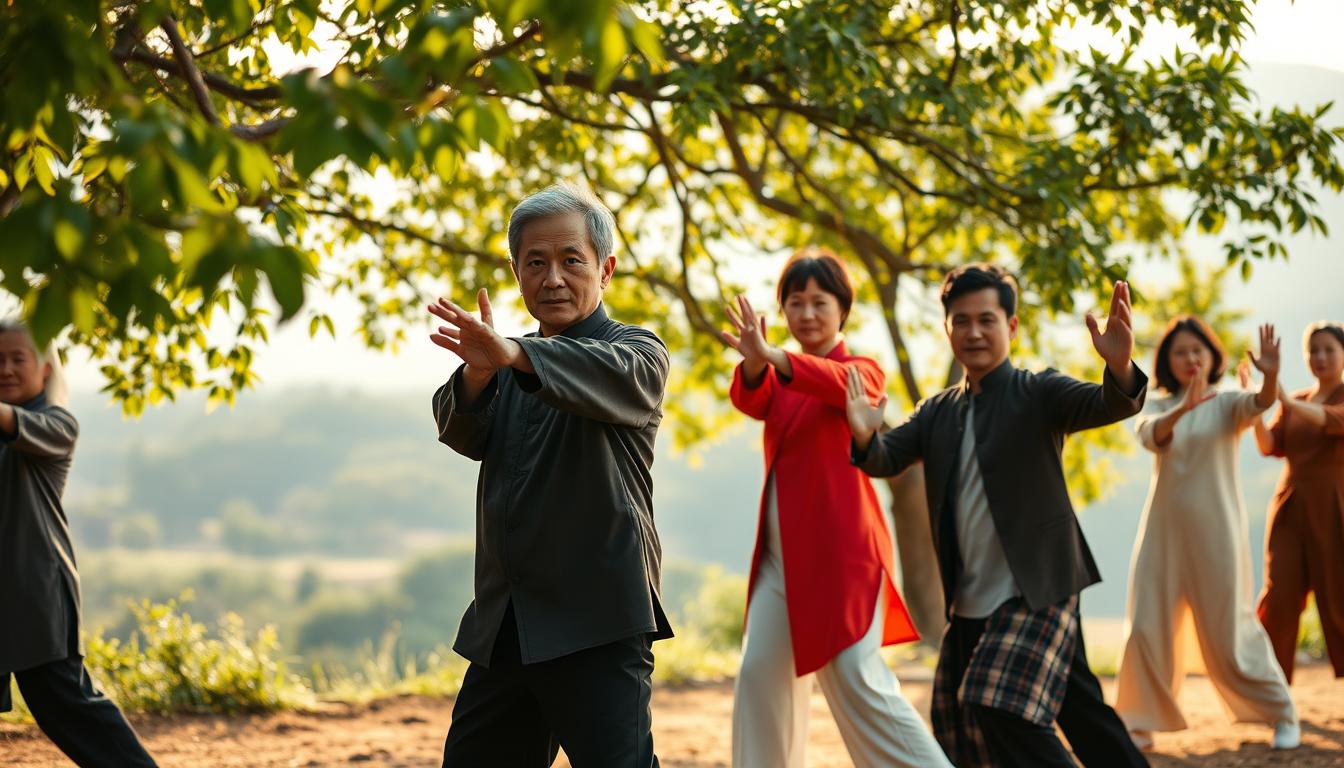
Repulse Monkey Walking uses a backward-stepping lunge to keep constant tension on your thighs, which is exactly why it tops the list for toning that area. Your quads will know it's working by the second minute.
Benefits:
- Deep quad and hamstring recruitment from the sustained backward lunge pattern.
- Improves thigh circulation, as alternating extension and flexion helps reduce fluid retention.
- Activates the inner thighs (adductors) more than standard walking, thanks to the slight inward foot placement.
- Engages the glutes through every rise out of the lunge, reinforcing lower-body power.
Step-by-Step Instructions and Breathing Pattern
- Feet shoulder-width, hands at waist height, palms up. Inhale 4 seconds, shift fully onto your left leg.
- Step your right foot back into a shallow lunge. Push the right palm forward, pull the left hand back.
- Exhale 5 seconds as you lower into the lunge. Feel it in both thighs.
- Hold 1 second at the bottom, then inhale 4 seconds rising back up, shifting to the right leg.
- Exhale 5 seconds, step the left foot back, mirror the lunge.
- Alternate for 10 minutes. Front knee tracks over the toes — always.
Best Suited For
People specifically chasing thigh fat loss and upper-leg toning as part of a broader best Tai Chi walking exercises for weight loss routine.
Why It Ranks #3
Best thigh-specific move on the list, full stop. Ranks just below the top two because it's intermediate — takes a little more coordination to get right.
4. Golden Rooster Stands on One Leg Walk — Best for Balance and Fat Loss
This one narrows your base of support to a single foot, forcing your hip and ankle stabilizers to work overtime just to keep you upright. Balance and fat loss, in the same move — not something you see often.
Benefits:
- Maximum stabilizer recruitment, since single-leg balance keeps the hip abductors and ankle stabilizers firing continuously.
- Raises metabolic demand even at a slow pace, since balance challenges increase effort in the core and standing-leg quadriceps.
- Builds fall-prevention strength, protecting you during the higher-intensity moves later on this list.
Step-by-Step Instructions and Breathing Pattern
- Feet together. Inhale 4 seconds, shift all weight onto the left leg.
- Exhale 5 seconds, slowly lift the right knee to hip height, right arm rising overhead.
- Hold the balance for 3–5 seconds. Breathe shallow, stay steady.
- Inhale 3 seconds, lower the right foot forward into a step.
- Exhale 4 seconds, transfer weight forward, get ready to lift the left knee.
- Repeat for 8–10 minutes, alternating legs each step.
Best Suited For
People — especially in midlife or older — who want fat loss and fall-prevention rolled into one routine.
Why It Ranks #4
The balance-hold spikes stabilizer activation hard. But the slower pace costs it a bit on total calorie burn compared to the continuous-stepping moves ranked above it.
5. Grasp the Sparrow's Tail Walk — Best for Core and Abs
Grasp the Sparrow's Tail combines a push-pull arm sequence with a weight shift, which hits both the superficial and deep core muscles at the same time. It's the closest thing on this list to a moving ab workout.
Benefits:
- Layered abdominal engagement from the push-pull arm sequence, working the rectus abdominis and obliques together with each weight shift.
- Improves trunk stability by strengthening the transverse abdominis, which supports better posture and a flatter midsection.
- Functional strength carryover, since the grasping and pressing motion mimics real-world pushing and pulling while engaging the shoulders.
Step-by-Step Instructions and Breathing Pattern
- Feet shoulder-width, arms curved like you're holding a big ball. Inhale 4 seconds, shift weight to the back leg, draw arms inward.
- Step forward with the front foot, rotating your torso slightly.
- Exhale 5 seconds — press both arms forward, weight onto the front leg, core braced tight.
- Pause 1 second at full extension.
- Inhale 4 seconds, shift weight back, draw the arms in again.
- Continue for 10 minutes. Brace the core on every single press.
Best Suited For
Anyone chasing ab definition specifically, alongside general results from the best Tai Chi walking exercises for weight loss.
Why It Ranks #5
Combines rotation, pressing, and weight-shifting for the most complete core workout on this list. The coordination demand keeps it just outside the top four.
6. Brush Knee Walking — Best for Beginners
Brush Knee Walking is about as low-barrier as this list gets — a simple knee-brushing arm motion paired with basic forward stepping. Nothing fancy, and that's exactly the point.
Benefits:
- Gentle full-body introduction, lightly activating the quadriceps and core, ideal for first-time practitioners.
- Low coordination demand, making it one of the easiest sequences on this list to learn.
- Joint-safe movement for the calves and shoulders, since the minimal knee flexion depth suits anyone coming off a sedentary stretch.
Step-by-Step Instructions and Breathing Pattern
- Feet together, one hand raised near the ear, the other near the hip. Inhale 3 seconds, shift weight to the back leg.
- Step forward with the opposite foot, raised hand sweeping down past the knee.
- Exhale 4 seconds — press the opposite palm forward, weight shifts onto the front leg.
- Hold 1 second. Feel the front thigh engage.
- Inhale 3 seconds, shift weight back, reset the arms.
- Repeat on the other side for 8–10 minutes.
Best Suited For
Total beginners. Deconditioned folks. Anyone just getting started with the best Tai Chi walking exercises for weight loss and not ready for anything fancy yet.
Why It Ranks #6
Extremely accessible — no argument there. But lower coordination and lower intensity mean a lower calorie burn than the five moves above it.
7. White Crane Spreads Wings Walk — Best for Upper Body Toning
This move opens the chest and spreads the arms wide with every step, which makes it the clear pick for shoulder and upper-back toning on this list. Bonus: it also fights the forward-hunch posture most desk jobs create.
Benefits:
- Shoulder and back activation — the wide arm-spreading motion works the deltoids, rhomboids, and trapezius more than any other exercise here.
- Improves posture by repeatedly opening the chest, counteracting a forward-hunched posture.
- Light cardio elevation from the wide stance and calf engagement combined with the arm lift.
Step-by-Step Instructions and Breathing Pattern
- Feet hip-width, hands crossed at chest height. Inhale 4 seconds, shift weight back, rise onto the ball of the front foot.
- Exhale 5 seconds, spread both arms out and up — one rising overhead, one lowering toward the hip.
- Hold 2 seconds. Chest stays open.
- Inhale 4 seconds, lower the arms, shift weight forward.
- Exhale 4 seconds, step forward, reverse the arm spread on the other side.
- Repeat for 8–10 minutes.
Best Suited For
People who specifically want their shoulders and upper back toned while still getting weight loss results from a Tai Chi walking routine.
Why It Ranks #7
Great for the upper body. But lighter demand on the legs means moderate calorie burn — right in the middle of this ranking, and that's honestly fine.
8. Parting Wild Horse's Mane Walk — Best for High-Intensity Burn
Parting Wild Horse's Mane covers the most ground and the most muscle groups of anything on this list, which is why it burns the most calories per session. It's also the hardest one to learn — fair trade.
Benefits:
- Maximum calorie expenditure, since the wide diagonal stepping and full-arm sweep create the highest exertion level, hitting the glutes and quadriceps hard.
- Total-body engagement, working the obliques and deltoids alongside the legs in one continuous diagonal motion.
- Cardiovascular conditioning from the larger range of motion, which elevates heart rate more consistently while taxing the calves.
Step-by-Step Instructions and Breathing Pattern
- Feet together, hands cradling an imaginary ball at the hip. Inhale 4 seconds, shift weight to the back leg.
- Step diagonally forward with the opposite foot into a wide stance.
- Exhale 5 seconds — sweep one arm diagonally up, the other down, weight fully onto the front leg.
- Hold 1 second in the wide stance. Core braced.
- Inhale 4 seconds, shift weight back to center.
- Exhale 5 seconds, step diagonally on the other side, reverse the arm sweep.
- Continue for 10–12 minutes.
Best Suited For
Advanced practitioners. People specifically hunting for the highest-calorie-burn option on this entire list.
Why It Ranks #8
Burns the most calories per session, easily. But the coordination demand is real, and that limits how many people can actually pull it off well — hence the mid-list ranking.
9. Single Whip Walking — Best for Full-Body Toning
Single Whip Walking spreads the workload evenly across the legs, core, and arms, which makes it the most balanced move on this list. No single muscle group dominates — everything gets a turn.
Benefits and Muscles Targeted
- Balanced muscle distribution, engaging the glutes, obliques, and deltoids in roughly equal measure.
- Wrist and hand activation in the forearms from the distinctive "hook hand" position, not found in other movements.
- Postural alignment, reinforced by the wide, grounded stance that also works the calves.
Step-by-Step Instructions and Breathing Pattern
- Feet together, hands gathered at the chest. Inhale 4 seconds, shift right, step the left foot into a wide stance.
- Exhale 5 seconds — right hand extends into a hooked position, left palm presses forward, weight shifts left.
- Hold 2 seconds in the wide stance.
- Inhale 4 seconds, draw the arms in, shift toward center.
- Exhale 4 seconds, step and repeat on the other side.
- Continue for 10 minutes.
Best Suited For
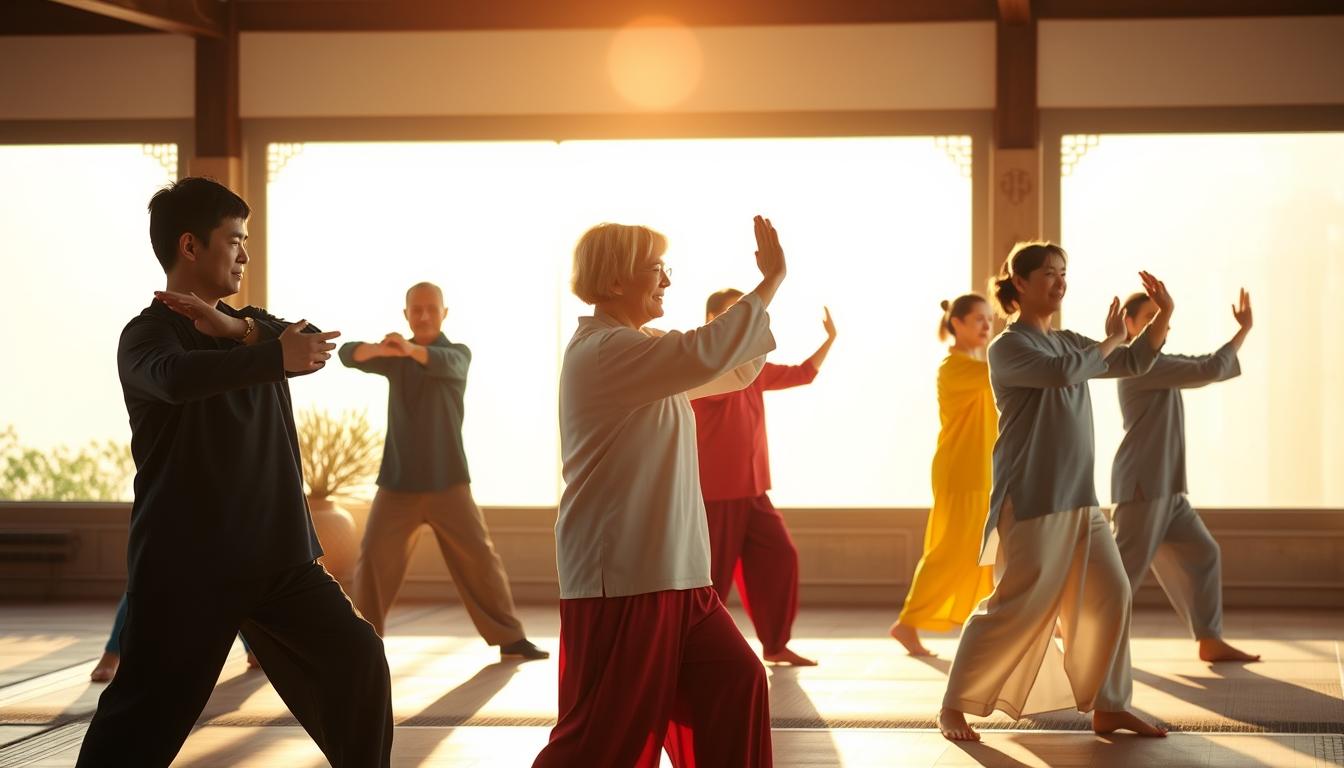
Anyone wanting balanced, total-body results without over-focusing on one area.
Why It Ranks #9
Even distribution makes it a solid toning move. But nothing here gets emphasized hard enough to outrank the more targeted exercises above it.
10. Snake Creeps Down Walk — Best for Lower Body Sculpting
This move drops your hips low and holds them there, which builds serious definition through the glutes and thighs. It's demanding on the knees, so ease into the depth rather than forcing it.
Benefits and Muscles Targeted
- Deep squat-based sculpting, since the low, sinking stance builds significant strength and definition in the glutes, quadriceps, and hamstrings.
- Ankle and calf flexibility, improved by the deep knee bend combined with a long stepping reach.
- High muscular endurance demand from sustained low positions, which increases the toning effect through the entire lower body.
Step-by-Step Instructions and Breathing Pattern
- Feet wide apart. Inhale 4 seconds, bend the right knee, sink your hips low, extend the left leg straight to the side.
- Exhale 5 seconds, slide your weight along the extended leg. Hips stay low.
- Hold 2 seconds. Both thighs should feel it.
- Inhale 4 seconds, rise slightly, shift weight back toward center.
- Exhale 5 seconds, sink into the mirrored position on the other leg.
- Repeat for 8–10 minutes. Only go as low as comfortable — don't force it.
Best Suited For
Intermediate to advanced practitioners specifically after leg sculpting and strength.
Why It Ranks #10
Highly effective for sculpting the lower body. But the advanced knee demand keeps it below the more broadly accessible exercises higher up.
11. Wave Hands Like Clouds Walk — Best for Stress-Related Weight Gain
Wave Hands Like Clouds trades intensity for calm, slow-flowing movement paired with deep breathing — an approach aimed at cortisol, not just calories. It's the gentlest exercise on this list, and it earns its spot for a different reason entirely.
Benefits and Muscles Targeted
- Nervous system regulation, since the slow, flowing arm waves paired with deep breathing help lower cortisol, a hormone linked to abdominal fat storage.
- Gentle full-body movement, providing light activation across the obliques, deltoids, and hip stabilizers without overexertion.
- Mind-body connection, encouraging present-moment focus that can reduce stress-driven eating patterns over time.
Step-by-Step Instructions and Breathing Pattern
- Feet shoulder-width, knees soft. Inhale 4 seconds, shift weight right, left arm rises in a slow wave.
- Exhale 5 seconds — rotate the torso left, right arm lowers in a mirrored wave, weight shifts left.
- Step the right foot beside the left as the wave finishes.
- Inhale 4 seconds, reverse the wave direction.
- Exhale 5 seconds, rotate and step to the other side.
- Continue for 10–15 minutes. Slow. Meditative. Don't rush this one.
Best Suited For
Anyone whose weight gain is tangled up with chronic stress or emotional eating. This is the gentlest entry point on the list, and honestly, that's the point.
Why It Ranks #11
The stress-reduction angle is unique here — nothing else on this list does that. But the deliberately slow pace means lower direct calorie burn than the exercises ranked above it.
12. Fair Lady Works Shuttles Walk — Best for Quick Sessions
Fair Lady Works Shuttles moves briskly through a diagonal step and overhead block, which raises heart rate fast enough to matter even in a short session. If you're short on time, this is the one to grab.
Benefits and Muscles Targeted
- Efficient calorie burn in less time, since the brisk diagonal stepping and overhead block motion elevate heart rate quickly, working the quadriceps and calves.
- Shoulder and core coordination, engaging the deltoids and obliques simultaneously through the overhead arm block paired with a forward press.
- Time-efficient toning, delivering noticeable muscular engagement in sessions as short as 10 minutes.
Step-by-Step Instructions and Breathing Pattern
- Feet together, hands at chest height. Inhale 3 seconds, pivot and step diagonally forward with the right foot.
- Exhale 4 seconds — block upward with the right arm, press forward with the left palm, weight onto the front leg.
- Hold 1 second.
- Inhale 3 seconds, pivot toward the opposite diagonal.
- Exhale 4 seconds, step and repeat the block-and-press on the other side.
- Keep it brisk for 10–12 minutes.
Best Suited For
Busy people. Anyone who needs results but doesn't have an hour to spare on a walking routine.
Why It Ranks #12
Efficient per minute, no question. But the shorter recommended session length caps its total calorie burn compared to the longer-duration moves ranked higher.
13. Needle at Sea Bottom Walk — Best for Advanced Practitioners

This move hinges deep forward at the hips while balancing on one leg, which is exactly why it's the most technically demanding exercise on this list. Good hip and hamstring mobility isn't optional here — it's required.
Benefits and Muscles Targeted
- Deep hip hinge strength, since the forward-bending, downward-reaching motion builds significant hamstring and erector spinae strength.
- Advanced balance challenge, combining a single-leg weight shift with a deep torso bend that taxes the hip flexors.
- Core-to-floor connection, strengthening the link between the deep core and lower body stabilizers.
Step-by-Step Instructions and Breathing Pattern
- Feet together. Inhale 4 seconds, shift weight to the back leg, sink the hips slightly.
- Exhale 5 seconds — hinge forward at the hips, one arm reaching downward, front foot staying light.
- Hold 2 seconds at the bottom. Brace the core hard to protect your lower back.
- Inhale 4 seconds, rise back to standing.
- Exhale 4 seconds, step forward, reset for the other side.
- Repeat for 8 minutes. Slow, controlled — this one doesn't forgive sloppy form.
Best Suited For
Experienced practitioners with decent hip and hamstring mobility looking for the toughest technical challenge on this list.
Why It Ranks #13
The strength benefits are excellent. But the technical skill required narrows the audience considerably, which is exactly why it sits near the bottom.
14. Push Hands Walking — Best for Seniors
Push Hands Walking keeps a wide, stable base and skips the single-leg balance work entirely, making it one of the safest options for older adults or anyone worried about falling. Low risk, real results.
Benefits and Muscles Targeted
- Extremely low fall risk, performed with a wide, stable base and minimal single-leg balance demand.
- Gentle cardiovascular activation, raising heart rate mildly while working the shoulders and triceps at a joint-safe pace.
- Functional pushing strength, mirroring everyday movements like opening doors or rising from a chair, with light core and calf engagement throughout.
Step-by-Step Instructions and Breathing Pattern
- Feet wide apart, knees soft, hands raised at chest height. Inhale 4 seconds, shift weight to the back leg, draw hands inward.
- Exhale 5 seconds — press both palms forward slowly, weight shifts to the front leg.
- Hold 1 second at full press.
- Inhale 4 seconds, draw hands back, shift weight to the rear leg again.
- Exhale 5 seconds, repeat the press.
- Continue for 10–15 minutes without changing foot position. Wide base, stable, the whole time.
Best Suited For
Older adults. Anyone with balance concerns who wants a genuinely safe way to lose weight without risking a fall.
Why It Ranks #14
One of the safest options here, no question. But the stationary stance means fewer calories burned than the stepping-based exercises ranked above it.
15. Cat Step Walking — Best for Long-Term Sustainable Weight Loss
Cat Step Walking barely loads the joints at all, which is exactly why it's the one most people can actually keep doing every single day. Low intensity, high consistency — and consistency is what actually moves the needle long-term.
Benefits and Muscles Targeted
- Extremely low joint stress, since the light, cat-like stepping pattern places minimal load on the calves, quadriceps, and hip flexors.
- Consistent, moderate calorie burn, sustainable enough to perform daily and compound results over time.
- Habit-building simplicity, requiring no memorization and only light core activation, removing a common barrier to consistency.
Step-by-Step Instructions and Breathing Pattern
- Stand tall, feet hip-width apart. Inhale 3 seconds, shift weight fully onto the right leg.
- Exhale 4 seconds, lift the left knee slightly, place the foot down softly — toes first, like a cat.
- Inhale 3 seconds, shift weight onto the left leg.
- Exhale 4 seconds, lift the right knee, step forward softly.
- Keep this light, quiet stepping pattern going for 15–20 minutes daily.
- Steady breathing throughout — this one's about duration and consistency, not intensity.
Best Suited For
Anyone who values consistency over intensity. If you've tried and quit a dozen fitness routines already, start here.
Why It Ranks #15
Lowest single-session calorie burn on the list. But it's also the one you'll actually keep doing — and that makes it, arguably, the most important exercise here for real, lasting results.
Comparing the Best Tai Chi Walking Exercises for Weight Loss by Goal
Picking the right move from this list comes down to one question: what's your specific goal, and the table below answers that in one glance.
| Goal | Recommended Exercise | Superlative Tag |
|---|---|---|
| General fat loss | Reverse Tai Chi Walk | Best for Overall Weight Loss |
| Belly fat | Cloud Hands Walking | Best for Belly Fat Loss |
| Thigh toning | Repulse Monkey Walking | Best for Thigh Toning |
| Balance training | Golden Rooster Stands on One Leg Walk | Best for Balance and Fat Loss |
| Core and abs | Grasp the Sparrow's Tail Walk | Best for Core and Abs |
| First-timers | Brush Knee Walking | Best for Beginners |
| Upper body | White Crane Spreads Wings Walk | Best for Upper Body Toning |
| Max burn | Parting Wild Horse's Mane Walk | Best for High-Intensity Burn |
| Full-body toning | Single Whip Walking | Best for Full-Body Toning |
| Leg sculpting | Snake Creeps Down Walk | Best for Lower Body Sculpting |
| Stress-related weight | Wave Hands Like Clouds Walk | Best for Stress-Related Weight Gain |
| Limited time | Fair Lady Works Shuttles Walk | Best for Quick Sessions |
| Advanced training | Needle at Sea Bottom Walk | Best for Advanced Practitioners |
| Seniors | Push Hands Walking | Best for Seniors |
| Daily habit | Cat Step Walking | Best for Long-Term Sustainable Weight Loss |
How to Combine These Into a Weekly Routine
You don't have to pick just one. Most people get the best results mixing a few — here's a sample week to steal.
| Day | Focus | Duration |
|---|---|---|
| Monday | Reverse Tai Chi Walk + Cloud Hands Walking | 25 min |
| Tuesday | Cat Step Walking (recovery pace) | 20 min |
| Wednesday | Repulse Monkey Walking + Golden Rooster Stands on One Leg Walk | 25 min |
| Thursday | Wave Hands Like Clouds Walk | 15 min |
| Friday | Parting Wild Horse's Mane Walk + Snake Creeps Down Walk | 25 min |
| Saturday | Grasp the Sparrow's Tail Walk + Single Whip Walking | 25 min |
| Sunday | Push Hands Walking or Cat Step Walking (easy day) | 15–20 min |