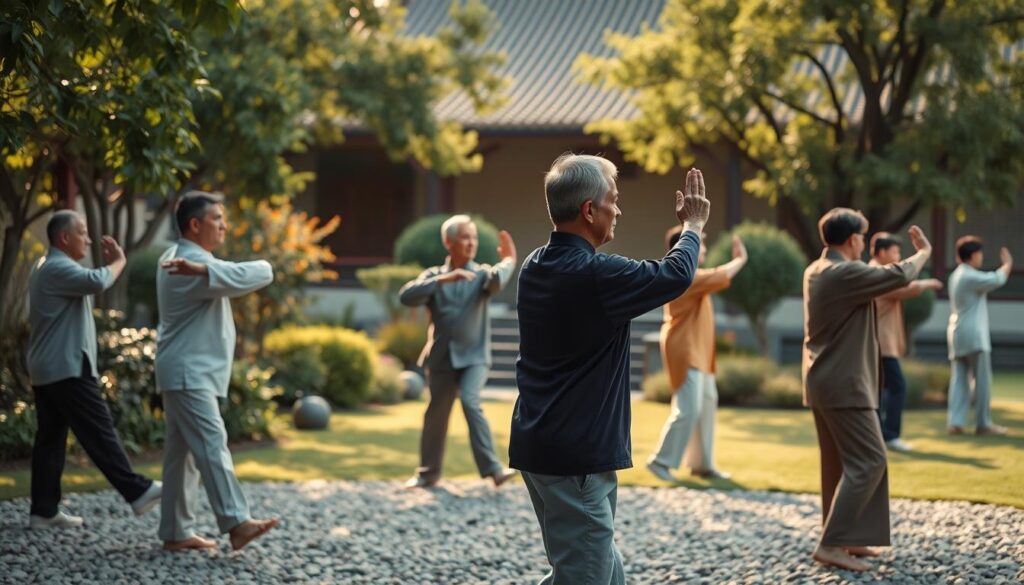
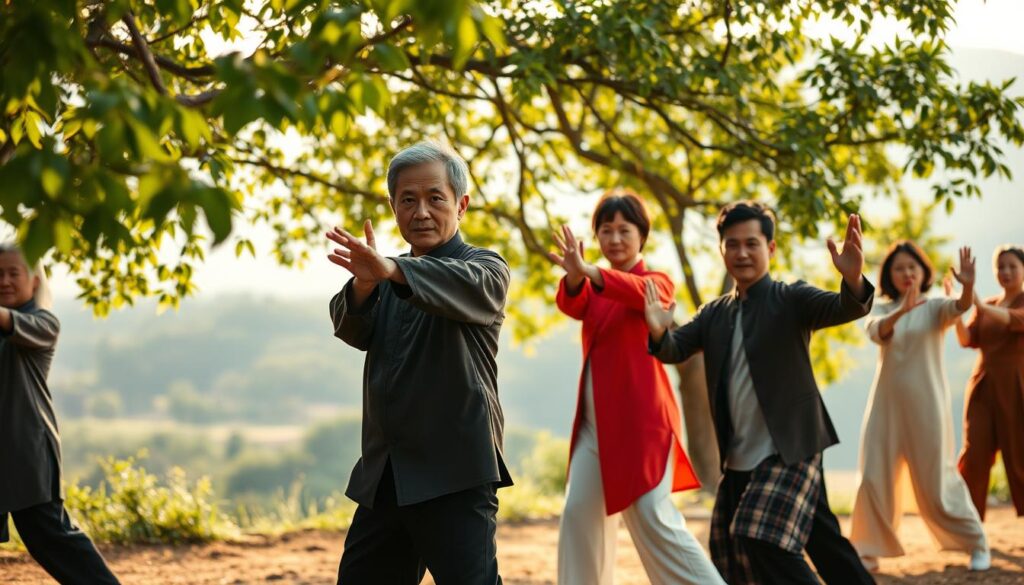
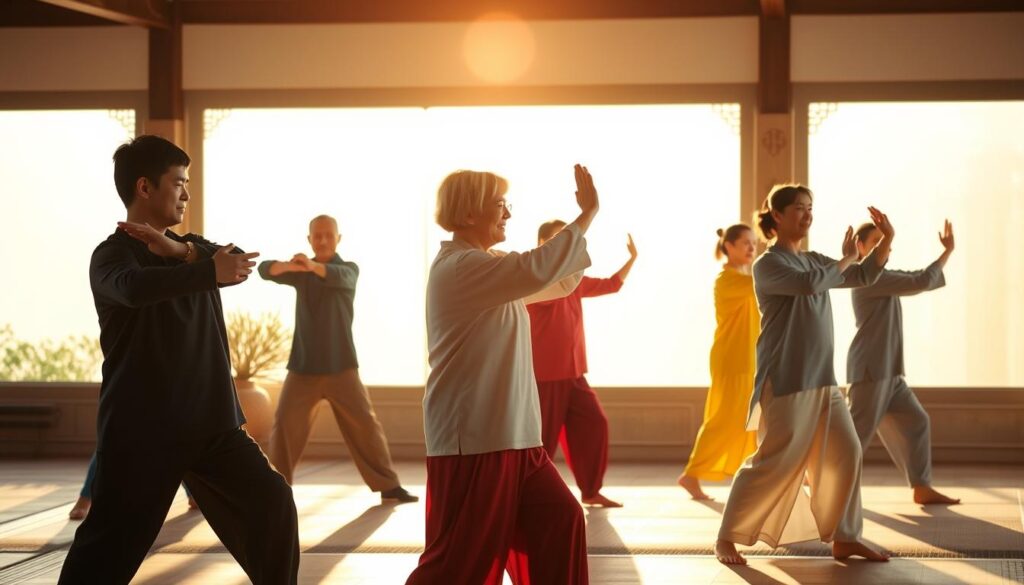
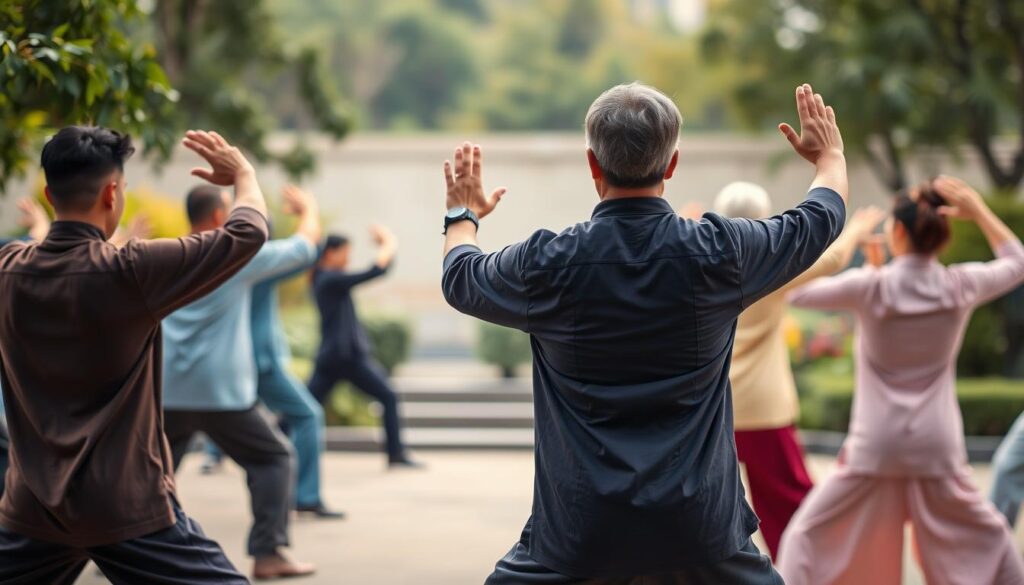
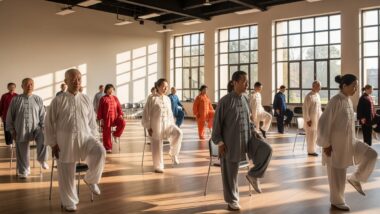
You can learn Tai Chi at home by mastering fundamental stances, practicing basic forms through online videos or instructional books, and dedicating 15-20 minutes daily to consistent practice. The best way to learn tai chi at home is by purchasing any of Dr. Paul Lam’s instructional DVDs or by buying a subscription to Dr. Paul Lam’s Tai Chi for Health Institute website so that you can have access to his specialized courses for specific health conditions including arthritis, diabetes, and fall prevention that affect millions of older men and women over 60 and 70. Also you will need at least a 6×6 foot clear space, comfortable loose clothing, flat-soled shoes, and a chair if you have balance issues or if you want to perform seated chair tai chi exercises which are ideal for stroke survivors trying to improve their balance and reduce their fall risk.
What You Need to Know Before Learning Tai Chi at Home
Understanding the Basics of Tai Chi
Tai Chi originated in China as a martial art combining slow, flowing movements with deep breathing and meditation. Five main styles exist: Yang, Chen, Wu, Sun, and Hao.
Yang style works best for beginners learning independently. The movements flow smoothly and gently, making them easier to follow without direct supervision. Chen style incorporates explosive power and low stances that require expert correction.
The practice cultivates "qi" (life energy) through coordinated breath and motion. Modern science confirms benefits including improved balance, reduced stress, and enhanced cardiovascular health.
Essential Equipment for Home Tai Chi Practice
You need minimal equipment to start:
Space Requirements:
Minimum 6×6 feet of clear floor space
Enough room to extend arms fully in all directions
Non-slip flooring (hardwood, carpet, or exercise mat)
Clothing:
Loose, comfortable pants and shirt
Flat, flexible shoes or bare feet
Layers for temperature adjustment
Optional Props:
Full-length mirror for form checking
Yoga mat for cushioning
Sturdy chair for balance support
Recording device for self-review
Setting Realistic Expectations for Self-Teaching
Most beginners achieve basic proficiency in 3-6 months with daily practice. The first two weeks focus entirely on stance and breathing. Month one introduces simple hand movements and weight shifts.
Timeline for Progress:
Timeframe
Expected Skills
Week 1-2
Basic stance, breathing patterns
Month 1
Simple movements, weight shifting
Month 2-3
First short form (8-10 movements)
Month 4-6
Complete 24-form, improved flow
Year 1+
Advanced forms, refined technique
Self-teaching works well for fitness and stress relief goals. Martial applications or teaching others eventually require professional instruction.
Step-by-Step Guide: How to Learn Tai Chi at Home for Beginners
The foundation stance determines everything that follows. Stand with feet shoulder-width apart, toes pointing forward. Knees bend slightly—never locked straight or pushed past your toes.
Proper Alignment:
Weight distributes evenly across both feet
Spine lengthens upward, chin tucks slightly
Shoulders relax downward, away from ears
Arms hang naturally at sides
Pelvis tilts slightly forward (imagine tucking tail)
Common mistakes include leaning back, tensing shoulders, or bending knees too deeply. Your stance should feel stable yet relaxed. Practice holding this position for 2-3 minutes while breathing naturally.
Step 2: Learn Essential Tai Chi Breathing Techniques
Diaphragmatic breathing powers all Tai Chi movements. Place one hand on your chest, the other on your belly. Proper breathing expands the belly while the chest remains relatively still.
Basic Breathing Pattern:
Inhale slowly through nose (4 counts)
Belly expands outward
Exhale through mouth or nose (6 counts)
Belly draws inward
Coordinate breath with movement: inhale during opening or rising motions, exhale during closing or sinking actions. Start with 5 minutes of isolated breathing practice before adding movements.
Step 3: Practice Basic Tai Chi Warm-Up Exercises
Warming up prevents injury and prepares your body for practice.
Essential Warm-Up Routine (5-7 minutes):
Neck Rolls: Gently rotate head in full circles, 5 each direction
Shoulder Circles: Lift shoulders up, back, down, forward—10 rotations each way
Waist Turns: Hands on hips, twist torso left and right—20 total
Hip Circles: Make large circles with hips, 10 each direction
Knee Rotations: Feet together, hands on knees, circle 10 times each way
Ankle Flexes: Rotate each ankle, point and flex toes
These exercises activate joints and increase blood flow. Never skip warm-ups, even for short practice sessions.
Step 4: Begin with Simple Tai Chi Movements
Learning the Basic Hand Forms
Cloud Hands (Yun Shou) represents the most fundamental Tai Chi movement. Stand in basic stance. Shift weight to right leg while left hand rises to shoulder height, palm facing you. Circle the hand across your body as weight shifts left. The opposite hand mirrors this pattern.
Practice cloud hands for 10 minutes daily. The movement should feel continuous, like stirring water. Hands never stop moving; weight never settles completely.
Grasping the Bird's Tail combines four techniques: ward off, roll back, press, and push. This sequence appears in most Tai Chi forms.
Weight distribution follows the 70/30 principle. Seventy percent sits on one leg, thirty on the other. You never balance 50/50 except during brief transitions.
Weight Shift Practice:
Start in basic stance (50/50)
Slowly shift to 70% right, 30% left
Hold for 5 breaths
Shift to 70% left, 30% right
Repeat 10 times
Your body should glide smoothly between positions. Imagine moving through water—constant, controlled resistance shapes every transition.
Step 5: Progress to Your First Tai Chi Form
The 24-form Yang style (also called Beijing form) offers the ideal starting point. Created in 1956, this simplified sequence takes 5-6 minutes to complete.
Learning Strategy:
Week
Focus
Goal
1
Movements 1-4
Memorize sequence
2
Movements 5-8
Add to previous
3
Movements 9-12
Build continuity
4
Movements 13-16
Smooth transitions
5
Movements 17-20
Refine details
6
Movements 21-24
Complete form
Learn one movement completely before adding the next. Watch instructional videos in slow motion. Practice each section 20-30 times before moving forward.
Break complex movements into smaller pieces. "White Crane Spreads Wings" divides into weight shift, arm raise, and stepping—three distinct actions practiced separately first.
Best Resources for Learning Tai Chi at Home
Top Online Tai Chi Video Courses and Tutorials
Free YouTube Channels:
Dr. Paul Lam – Medical doctor specializing in Tai Chi for health
Tai Chi Foundation – Traditional Yang style instruction
Yoqi Yoga and Qigong – Beginner-friendly short routines
Tai Chi 4 You – Detailed form breakdowns
Paid Programs Worth Considering:
Tai Chi for Energy by Dr. Paul Lam ($30-50) – Structured 6-week curriculum
Yang Style Tai Chi by Udemy instructors ($20-100) – Lifetime access to step-by-step lessons
Taiji Zen streaming service ($15/month) – Classes by Jet Li's organization
DVD options work well for those preferring offline access. Look for instruction that shows front, back, and side angles simultaneously.
Recommended Tai Chi Books for Home Learners
Top Instructional Books:
Title
Author
Best For
The Harvard Medical School Guide to Tai Chi
Peter Wayne
Health benefits, scientific approach
Tai Chi Illustrated
Master Lam Kam Chuen
Visual learners, step-by-step photos
The Tai Chi Handbook
Herman Kauz
Understanding principles
Tai Chi Chuan: 24 & 48 Postures
Shou-Yu Liang
Form mastery with detailed images
Books complement video instruction but cannot replace movement demonstration. Use them for deepening conceptual understanding and reviewing form details.
Tai Chi Step by Step (iOS/Android, Free) – Animated figures show each movement
Tai Chi Cheng Man-Ching 37 (iOS, $5) – Classic Yang form with instructions
Insight Timer (Free) – Guided Tai Chi meditations and breathing exercises
Simple Tai Chi (Android, Free) – Beginner routines with timers
Apps provide practice reminders and progress tracking. Most lack comprehensive instruction, so combine them with video courses.
Creating an Effective Home Tai Chi Practice Routine
How Often Should You Practice Tai Chi at Home?
Daily practice produces the best results. Fifteen to twenty minutes maintains what you've learned. Thirty to forty-five minutes drives improvement.
Optimal Practice Schedule:
Beginners: 6 days per week, 15-20 minutes
Intermediate: 5-7 days per week, 30-40 minutes
Advanced: Daily, 45-60 minutes
Morning practice energizes you for the day. Evening sessions promote relaxation and better sleep. Consistency matters more than duration. Twenty minutes daily beats two hours on weekends.
Structuring Your Daily Tai Chi Session
Effective 20-Minute Practice Template:
Minutes 1-5: Warm-Up
Joint rotations and stretches
Standing meditation in basic stance
Breathing exercises
Minutes 6-15: Form Practice
Review previously learned movements
Add new material (if learning)
Full form run-through (if complete)
Minutes 16-20: Cool-Down
Slow walking meditation
Gentle stretches
Standing or seated meditation
The warm-up prepares your body physically. Cool-down integrates the practice mentally and physically. Neither should be skipped.
Tracking Your Progress When Learning Tai Chi Independently
Recording practice sessions provides objective feedback. Set up your phone or camera to capture your full body. Review footage weekly, comparing it to instructional videos.
Mirror Work: Position yourself to see your full body. Check alignment points during slow practice.
Video Comparison: Record yourself performing a movement. Watch it immediately next to an instructional video. Note three differences. Fix one at a time.
Checklist Method: Create a form-specific checklist (knees aligned, shoulders relaxed, weight distributed correctly). Review each point after practice.
Slow Motion: Practice at 25% normal speed. This reveals alignment issues hidden at regular pace.
Record from multiple angles. Front view shows arm symmetry and stance width. Side view reveals posture, knee alignment, and weight distribution. Back view confirms spinal alignment and shoulder position.
Avoiding Bad Habits in Self-Directed Learning
Bad habits become harder to correct the longer they persist.
Common Self-Teaching Mistakes:
Mistake
Why It Happens
Solution
Rushing movements
Impatience to progress
Use counts or music to control pace
Shallow breathing
Focusing only on physical form
Dedicate first 5 minutes to breath work
Tense shoulders
Unconscious stress holding
Set hourly reminders to check tension
Locked knees
Misunderstanding "straight" legs
Video yourself from side angle
Memorizing without understanding
Treating it like choreography
Study the martial applications
Slow practice reveals errors fast practice hides. If you cannot perform a movement slowly with control, you have not truly learned it.
Seek occasional online coaching. Many instructors offer one-time video review sessions ($30-75). Submit your practice video for professional feedback every 2-3 months.
Advanced Tips for Home Tai Chi Practitioners
Deepening Your Practice After Mastering the Basics
Once you complete the 24-form confidently, several paths open.
Progression Options:
Learn longer forms: 48-form or traditional 108-form Yang style
Study different styles: Chen style for power, Wu style for small movements
Add Qigong: Standing meditation practices like Zhan Zhuang
Weapon forms: Tai Chi sword (jian) or staff after 1-2 years
Weapon forms require additional space and equipment. The sword form enhances arm extension and coordination. Staff work develops core strength and two-handed coordination.
Qigong Integration:
Qigong focuses more on stationary postures and energy cultivation. Five-minute standing meditation before Tai Chi centers your mind and body. Eight Brocades (Ba Duan Jin) combines well with Tai Chi practice.
Connecting Mind, Body, and Energy in Your Home Practice
Energetic (Qi): Breath coordination, internal sensation, energy flow
Visualize energy moving through your body as you practice. During "Brush Knee and Twist Step," imagine drawing energy up your back leg and directing it out your pushing palm. These mental images were originally real concepts, not metaphors.
Meditation amplifies Tai Chi benefits. Five minutes of seated breathing after practice settles scattered thoughts and integrates the session.
Joining the Virtual Tai Chi Community
Connection with other practitioners enriches solo training.
Ways to Connect:
Live-streamed classes: Real-time instruction with chat interaction ($10-20/class)
Online workshops: Weekend intensive sessions on specific topics ($50-150)
Virtual practice groups: Zoom sessions where students practice together
Forums and social media: Share experiences, ask questions, find resources
Some instructors host free weekly community practice sessions online. You practice muted while others do the same. The shared energy mimics in-person class atmosphere.
Supplementing Your Home Tai Chi Learning
When to Consider Occasional In-Person Instruction
Hybrid learning combines home practice with periodic professional feedback.
Situations Requiring Expert Input:
You've plateaued and cannot identify the problem
Chronic pain develops during practice
You want to learn martial applications
Competition or demonstration interest
Teaching others becomes your goal
A quarterly workshop or private lesson corrects accumulated errors. Many studios offer single-session drop-ins ($15-30) without long-term commitment.
Intensive weekend workshops pack significant learning into 8-12 hours. These work well for remote learners who cannot attend regular classes.
Cross-Training Activities That Complement Tai Chi
Beneficial Complementary Practices:
Activity
Tai Chi Benefit
Yoga
Increased flexibility, similar breath work
Walking meditation
Mindfulness, leg strength
Swimming
Low-impact cardio, full-body coordination
Balance exercises
Core stability, proprioception
Pilates
Core strength, body awareness
Strength training supports deeper stances and better body control. Focus on legs, core, and postural muscles rather than bulking up arms.
Avoid high-impact activities immediately before Tai Chi practice. The soft, internal nature of Tai Chi cannot be accessed from an already-activated nervous system.
Understanding Traditional Chinese Medicine Principles
Tai Chi developed within the context of Traditional Chinese Medicine (TCM). Understanding basic concepts deepens practice.
Key TCM Concepts:
Meridians: Energy pathways throughout the body
Yin and Yang: Complementary opposites (yielding and firm, rising and sinking)
Five Elements: Wood, Fire, Earth, Metal, Water—each associated with movements and organs
Qi Cultivation: Building and directing life energy
You do not need to accept TCM philosophy to benefit from Tai Chi. Many Western practitioners view these concepts as useful metaphors for body awareness and movement quality.
Seasonal practice adapts to natural energy cycles. Spring emphasizes expansion and growth. Winter focuses on conservation and internal cultivation.
Safety Considerations for Practicing Tai Chi at Home
Preventing Injuries During Solo Practice
Tai Chi ranks among the safest exercises, but injuries can occur without proper precautions.
Injury Prevention Guidelines:
Always warm up before practicing forms
Stop immediately if you feel sharp pain
Avoid deep stances if you have knee problems
Practice on non-slip surfaces only
Stay hydrated, especially during longer sessions
Never force flexibility or range of motion
Most Tai Chi injuries result from practicing on slippery floors or pushing too hard into low stances. Your knees should never extend past your toes. Pain signals a problem—discomfort from muscle engagement is normal, joint pain is not.
Tai Chi Modifications for Different Fitness Levels
Adaptations for Specific Needs:
Seniors and Beginners:
Higher stances (less knee bend)
Slower transitions between movements
Wall or chair support during balance challenges
Shorter practice sessions (10-15 minutes)
Limited Mobility:
Chair Tai Chi performs forms while seated
Smaller movement ranges with same principles
Focus on upper body and breathing
Standing optional, not required
Previous Injuries:
Avoid movements stressing the affected area
Substitute similar motions that feel safe
Consult physical therapist about modifications
Build gradually back to full practice
No one "correct" way exists to practice. Tai Chi adapts to your current abilities while challenging you to improve gradually.
When to Consult a Healthcare Provider
Medical Consultation Recommended For:
Pre-existing heart conditions, high blood pressure, or respiratory issues
Joint problems, arthritis, or previous injuries
Balance disorders or vertigo
Pregnancy (especially first trimester)
Recent surgery or acute injuries
Tai Chi complements medical treatment but never replaces it. Inform your doctor about your practice, especially if you take medications for chronic conditions. Blood pressure medications may need adjustment as Tai Chi improves cardiovascular health.
Stop practicing and seek medical advice if you experience dizziness, chest pain, severe joint pain, or shortness of breath beyond normal exertion.
Measuring Success in Your Home Tai Chi Journey
Physical Improvements to Expect
Measurable changes appear within weeks of consistent practice.
Timeline for Physical Benefits:
Timeframe
Expected Improvements
2-4 weeks
Better posture, initial stress reduction
1-2 months
Improved balance, increased body awareness
3-4 months
Enhanced flexibility, stronger legs
6-12 months
Significant stress management, coordinated movement
1+ years
Maintained improvements, continued refinement
Balance improvements often appear first. Standing on one foot becomes easier within a month. Flexibility increases gradually—touching toes or sitting cross-legged becomes more comfortable.
Leg strength develops from holding gentle stances. You might notice climbing stairs requires less effort or standing for long periods becomes easier.
Mental and Emotional Benefits of Regular Practice
The internal benefits often exceed physical ones.
Psychological Improvements:
Stress Reduction: Cortisol levels drop with regular practice
Anxiety Management: Moving meditation calms racing thoughts
Better Sleep: Evening practice promotes deeper rest
Improved Focus: Single-pointed attention carries into daily life
Many practitioners report feeling "centered" or "grounded" after practice. This describes a mental state of calm alertness, ready but not tense. The effect lasts hours beyond the practice session itself.
Depression symptoms may lessen with consistent practice, though Tai Chi should supplement, not replace, proper mental health treatment.
Long-Term Goals for Home Tai Chi Students
Progression Milestones:
First Year: Master one complete form, understand basic principles
Years 2-3: Learn second form or style, deepen internal aspects
Years 4-5: Develop personal style within traditional framework
Years 5+: Potentially teach others, continuous refinement
Tai Chi has no finish line. Masters with 40+ years still discover new depths in familiar movements. This lifelong practice adapts as your body and life circumstances change.
Some students eventually perform at demonstrations or competitions. Others simply enjoy private practice. Both paths hold equal value.
Frequently Asked Questions About Learning Tai Chi at Home
Can You Really Learn Tai Chi at Home Without an Instructor?
Yes, thousands of people successfully learn Tai Chi independently using video instruction and consistent practice. The physical form can be learned without in-person teaching. Subtleties like internal energy work and martial applications benefit from expert guidance.
Self-Learning Works Best For:
General fitness and health benefits
Stress reduction and relaxation
Basic form proficiency
Flexible scheduling around other commitments
In-Person Instruction Needed For:
Correcting subtle alignment issues
Understanding martial applications
Teaching others professionally
Competition preparation
Most successful home learners occasionally attend workshops or take private lessons for feedback. The hybrid approach combines convenience with quality control.
How Long Does It Take to Learn Tai Chi at Home?
Basic proficiency in a simple form takes 3-6 months with daily practice. You will remember the sequence and perform movements recognizably. True mastery requires years.
Learning Timeline Factors:
Practice frequency: Daily practice accelerates learning
Previous experience: Dance, martial arts, or yoga backgrounds help
Form complexity: 8-form learns faster than 108-form
Body awareness: Some people naturally sense movement better
Someone practicing 20 minutes daily will progress significantly faster than someone practicing 2 hours weekly. Consistency matters more than session length.
What Is the Best Tai Chi Style for Learning at Home?
Yang style, specifically the simplified 24-form, works best for independent learners. The movements are large, slow, and evenly paced—easier to follow without correction.
Style Comparison:
Style
Difficulty
Best For
Yang (simplified)
Easy
Home beginners
Yang (traditional)
Moderate
After mastering basics
Chen
Hard
Advanced students with instruction
Wu
Moderate
Those wanting compact movements
Sun
Moderate
Seniors, mobility issues
Chen style incorporates explosive movements and very low stances that require expert supervision. Wu style uses smaller movements difficult to see in videos. Sun style moves at a higher stance, good for older learners.
Start with Yang 24-form regardless of which style interests you long-term. The principles transfer once you build a foundation.
Do I Need Special Equipment to Practice Tai Chi at Home?
No special equipment is required. You need comfortable clothing, adequate space, and instructional resources.
Minimum Requirements:
6×6 feet clear space
Loose-fitting clothes
Flat shoes or bare feet
Video player or internet access
Helpful But Optional:
Full-length mirror ($30-100)
Non-slip exercise mat ($20-50)
Sturdy chair for balance ($30+)
Recording device (smartphone works)
Total startup costs can be under $50 if you use free online videos and practice in regular clothes. Unlike many fitness activities, Tai Chi does not require ongoing equipment purchases or expensive gear.
Is Tai Chi Effective for Stress Relief When Practiced at Home?
Yes, research confirms Tai Chi significantly reduces stress markers including cortisol levels, heart rate, and blood pressure. The combination of slow movement, deep breathing, and focused attention activates the parasympathetic nervous system—your body's relaxation response.
Regular practice builds stress resilience over time
Studies show benefits appear within 8-12 weeks of consistent practice. Home practice provides stress relief equal to class attendance, assuming proper technique. The meditative quality matters more than the setting.
Can Seniors Safely Learn Tai Chi at Home?
Absolutely. Tai Chi ranks among the safest and most beneficial exercises for older adults. Studies show it reduces fall risk by up to 45% and improves quality of life in seniors.
Safety Modifications for Seniors:
Use chair for balance support initially
Practice higher stances (less knee bend)
Slow transitions between movements
Start with 10-minute sessions
Consider chair Tai Chi variations
Seniors should inform their doctor before starting, especially with pre-existing conditions. Most physicians enthusiastically support Tai Chi for older patients given the extensive research showing benefits.
The low-impact nature makes Tai Chi appropriate for ages 60, 70, 80+. Many people begin Tai Chi in retirement and practice for decades, often reporting it keeps them mobile and independent.
Learning Tai Chi at home requires patience, consistent practice, and quality instruction resources. Start with the fundamentals—proper stance, breathing, and simple movements. Progress gradually through a beginner form like the Yang style 24-posture sequence. Daily 15-20 minute sessions produce better results than longer, infrequent practice. Use video resources for instruction, record yourself for feedback, and connect with online communities for support. Most importantly, approach the practice with curiosity rather than perfectionism. Tai Chi offers a lifetime of discovery, accessible to anyone willing to invest regular, mindful effort.